
The Met office had said Monday that significantly higher-than-normal temperatures may have an adverse impact on wheat and other crops.

Apart from the metropolis, several other parts of Maharashtra also reported a drop in night temperatures, resulting in chill and cool breeze in those areas.
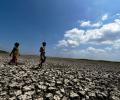
'The first two months of monsoon are not looking good.' 'In case both the halves fail, it is going to be misery.'

The mercury soared to 46.2 degrees Celsius at Najafgarh, making it the hottest place in the capital.

'Dense' to 'very dense' fog prevailed in parts of Punjab, Haryana, west Rajasthan, Bihar, Delhi, west Uttar Pradesh, Jharkhand, Odisha and Assam.

Delhiites continued to shiver for another day on Monday with the minimum temperature dipping to 2.3 degree Celsius, the second lowest recorded this season.

Dense to very dense fog prevailed in some parts of the National Capital Region (NCR), Haryana, Punjab, west Uttar Pradesh and north Rajasthan on Tuesday.
Eleven more people died in Uttar Pradesh as the intense cold wave sweeping north India maintained its firm grip over the region with Kargil town in Jammu and Kashmir freezing at minus 16.4 degrees Celsius.

The IMD said that rainfall over India in August and September would be around 106 percent of the long-period average of 422.8 mm.

Twelve out of the 15 warmest years since 1901 were during the past 15 years -- between 2006 and 2020, according to IMD data.

The minimum temperature in the national capital on Saturday settled at 10.2 degrees Celsius, three notches above the season's average, it said.

Addressing a press conference virtually, India Meteorological Department Director General Mrutyunjay Mohapatra said September was likely to witness normal rainfall in the range of 91-109 per cent of the long period average of 167.9 mm.

Such weather conditions are not typical for May which tends to be the hottest month of the year in Delhi with a mean maximum temperature of 39.5 degrees Celsius.

A severe cold wave brought the minimum temperature down to a numbing 1.5 degrees Celsius at the Ridge weather station in central Delhi.

Delhi's minimum temperature on Wednesday morning plunged to 4.4 degrees Celsius -- the season's lowest -- making the national capital colder than Dharamsala, Nainital and Dehradun.

Very dense fog lowered visibility to 50 metres at the Palam observatory, near the Indira Gandhi International airport, at 5:30 am.

Brace for some warmth this winter as the India Meteorological Department (IMD) in its December-February forecast on Thursday said that the minimum and maximum temperatures could remain 'normal' to 'above normal' over most parts of Northwest and Northeast India. Both the minimum and maximum will remain below normal in Southern Peninsular and Central India in these winter months. While this could give some respite from the intense cold of North India, it could have a negative impact on the standing rabi crops if the temperature rise is unusual and abnormal.

The denizens of Kashmir division experienced bone chilling cold as the night temperature in most places including summer capital Srinagar slipped below the freezing point, compounding the problems of those affected by the recent floods.

India is set to experience extreme heat during the April to June period, with the central and western peninsular parts expected to face the worst impact, the IMD said on Monday as the country prepares for seven-phase general elections from April 19.

"This year, the Southwest Monsoon is likely to set over Kerala on May 31 with a model error of four days," the India meteorological department said on Wednesday.

Large parts of north India reeled under numbing cold on Tuesday with the mercury remaining below freezing point at most places in Jammu and Kashmir, while dense fog in the early hours of the morning hit road and rail traffic movement.

Among the keenly watched contests are those involving former Uttar Pradesh chief minister Akhilesh Yadav (Kannauj, UP) and Union ministers Giriraj Singh (Begusarai, Bihar), Nityanand Rai (Ujiarpur, Bihar) and Raosaheb Danve (Jalna, Maharashtra).

Scores of people die every year due to cold waves that sweep across the north Indian plains.

Above-normal heatwave days are predicted in most parts of central, east and northwest India during this period.
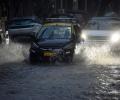
Rainfall in August is predicted to be below normal (less than 94 per cent of LPA), but the situation is expected to improve comparatively in September, the IMD said.

After churning across the Arabian Sea for more than 10 days, Biparjoy made landfall near Jakhau Port in Gujarat on Thursday.
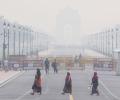
The capital witnessed a clear morning on Friday with the minimum temperature settling a notch below normal at 14.6 degrees Celsius.

A punishing cold wave swept Delhi on Monday morning with the minimum temperature at the Safdarjung observatory, the city's base station, plunging to 1.4 degrees Celsius, the lowest in the month since January 1, 2021.

The southwest monsoon is set to make its exit in style, bringing rains to the parched parts of Uttar Pradesh and Bihar, as weather forecasters have picked up signs of formation of a cyclonic circulation over Bay of Bengal. Addressing a press conference in New Delhi, India Meteorological Department (IMD) director general Mrutyunjay Mohapatra on Thursday junked last week's forecast of early withdrawal of southwest monsoon and announced the extended stay of the seasonal showers. "Even though we expected early withdrawal of the southwest monsoon, a cyclonic circulation over west-central and adjoining northwest Bay of Bengal will shift the monsoon trough southwards around September 7.

The city also witnessed cold wave conditions, as the minimum temperature was less than 10 degrees Celsius and five notches below normal, according to Mahesh Palawat, an expert at Skymet Weather, a private forecasting agency.

Delhi saw seven cold wave days in January 2020, while it did not record any such day last year.

Farmers' protest against the three farm laws passed by the Centre has entered its 23rd day on Friday. "We are preparing ourselves for a longer stay as our fight against black laws will continue. It's getting colder, so we're putting more tents," said a protester.

The average temperatures observed pan-India for April was 35.05 degrees, which was the fourth highest in 122 years.
It was the coldest city in the plains with the mercury touching 0.3 degree Celsius, four below normal.

Data released by the IMD on Thursday showed that the mean minimum temperature (MMT) this December was 7.1 degrees Celsius.
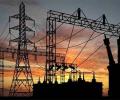
With the cooling down of heatwaves as the monsoon spreads across the country, power demand has fallen by 12.5 per cent from the start of this month till Monday. Peak power demand of the country had touched a record of 210 Gw last week, mostly due to rising temperatures and opening up of the economy. Compared with the beginning of this month, almost all states have seen a fall in power demand. Punjab, however, is an exception where the power demand on Monday was 17 per cent higher than on June 1.

The country can expect normal rainfall during the southwest monsoon season as a positive Indian Ocean Dipole (IOD) and a lower snow cover over the northern hemisphere are likely to counter the evolving El Nino conditions, the India meteorological department (IMD) said on Tuesday.

'What we are seeing is some bursts of a cold wave.' 'It comes, troubles you for three-four-five-days and thereafter relaxes for another few days.' 'And then another fresh one (cold wave) comes.'
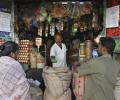
Sales of fast-moving consumer goods (FMCG) witnessed significant recovery in September after enduring a double-digit decline in August, according to data furnished by Bizom. Kirana stores in rural areas stocked up in preparation for the festival season, which began in September. This, combined with rainfall reaching 113 per cent of the long-perid average for the month, contributed to a boost in sales.

Operations at the Delhi airport remained normal. However, three flights were returned or diverted to the Delhi airport due to bad weather in Chandigarh, Varanasi and Lucknow on Tuesday night.
